
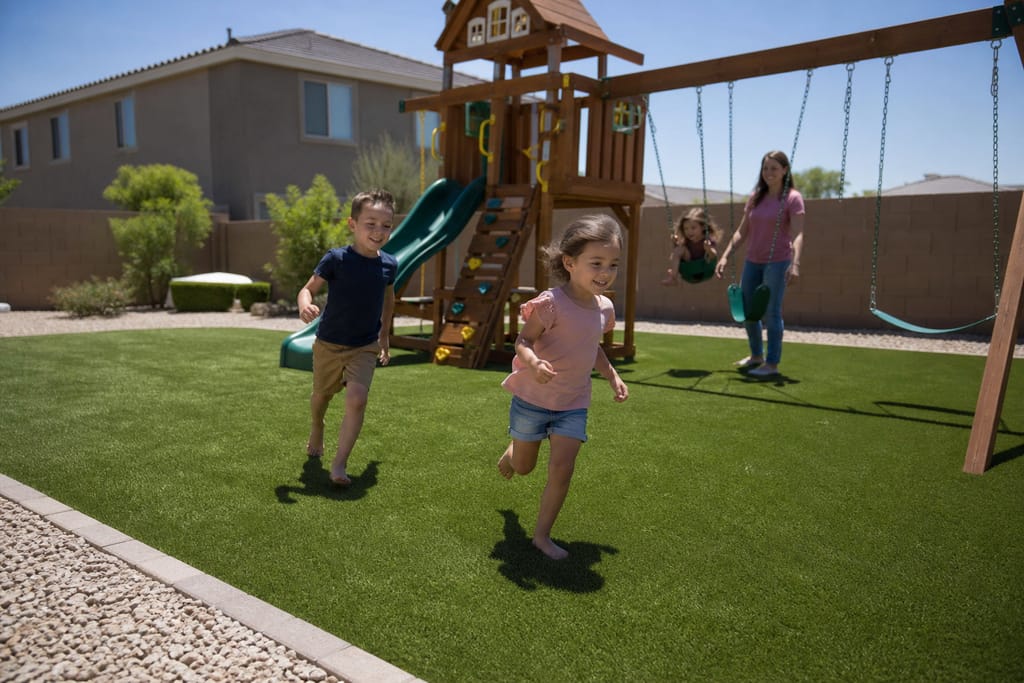
Anthem Artificial Turf
Desert-Adapted Turf Installs in Anthem, AZ
Desert-adapted turf installs in Anthem, AZ with heat-resistant fibers and reflective infill. Free estimates on heat-rated turf.
- 15+ Years local experience
- 500+ Projects completed
- Licensed & Insured
Serving Anthem and nearby communities.
Standard turf dropped into a desert yard gets too hot to walk on barefoot by mid-morning in July. Anthem Artificial Turf installs desert-adapted turf systems engineered for heat retention, not a generic product sold the same way in every climate.
Anthem sits at a higher elevation than much of the Phoenix basin, which means bigger day-to-night temperature swings. That swing stresses standard turf seams over time, so our desert-adapted installs build in expansion allowance at the base and seam stage.
What's included
What's Included with Desert-Adapted Turf Installs
Typically included: heat-tolerance material selection, soil moisture testing, reflective base prep, expansion-tolerant seaming, surface temperature check at completion.
Optional: upgraded reflective infill for play or seating areas, shaded zone planning for patio-adjacent turf.
Customer prep: let us know which parts of the yard get direct afternoon sun versus shade for material selection.
Want a clearer scope?
Get a Free EstimateHow it works
How Our Desert-Adapted Turf Installs Process Works
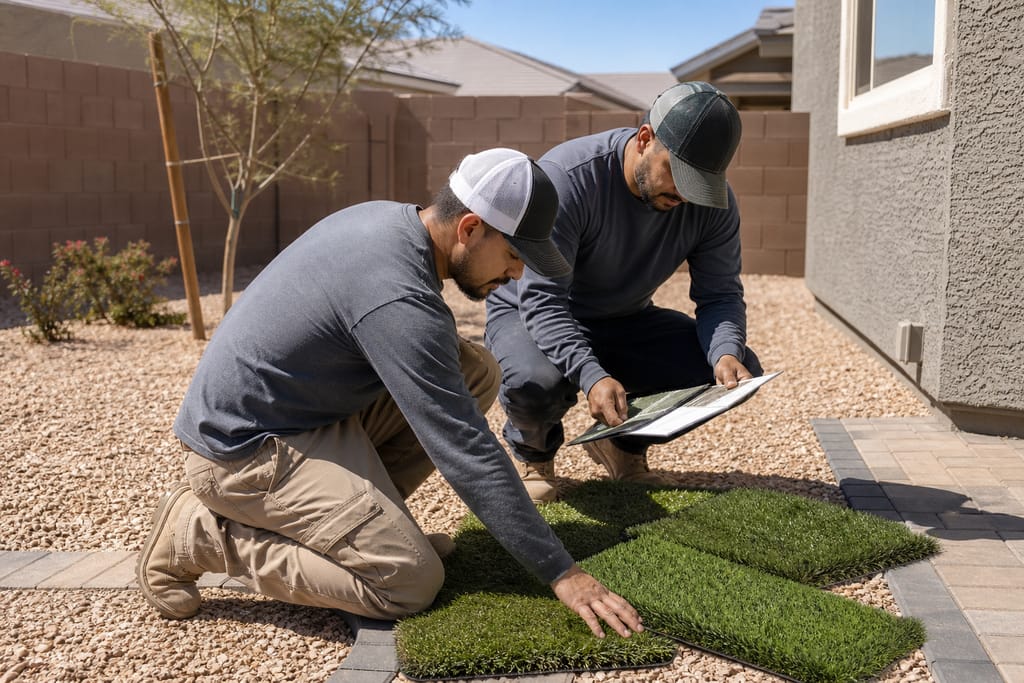 Step 1
Heat tolerance planning
Turf products are selected based on resistance to high heat and intense sun exposure.
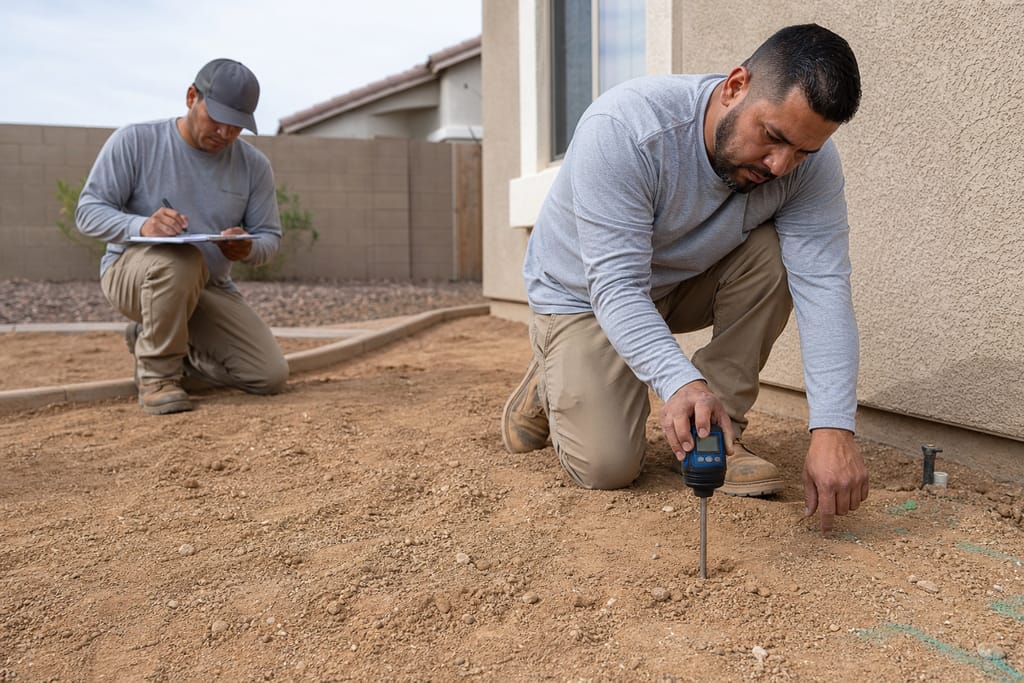 Step 2
Soil moisture testing
Existing soil conditions are tested to plan appropriate drainage solutions.
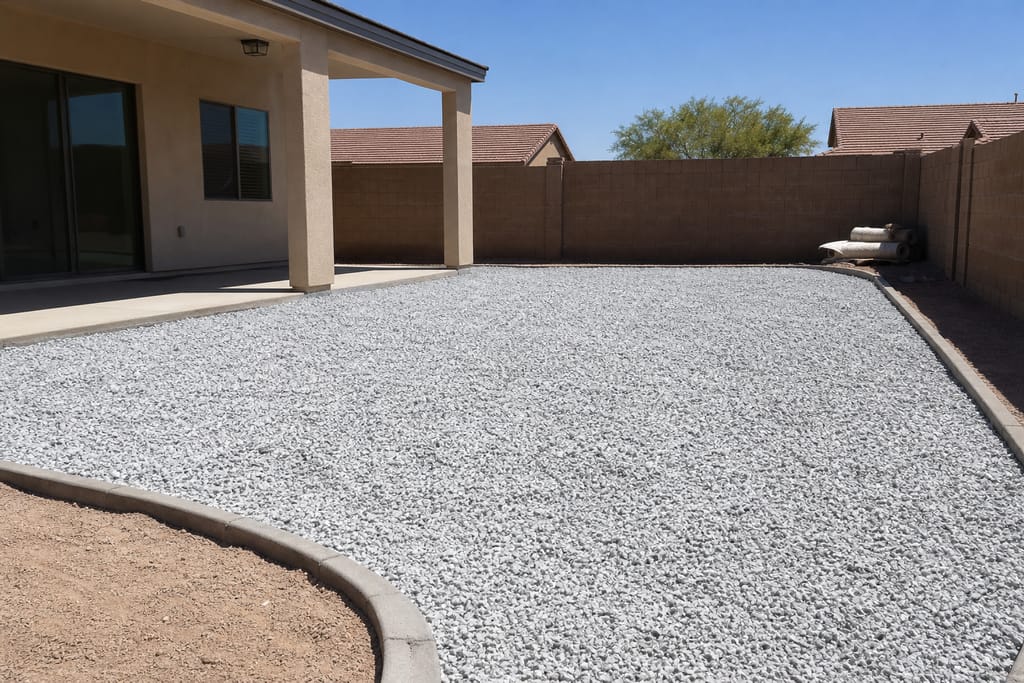 Step 3
Reflective base prep
Base materials are chosen to reduce heat retention beneath the turf surface.
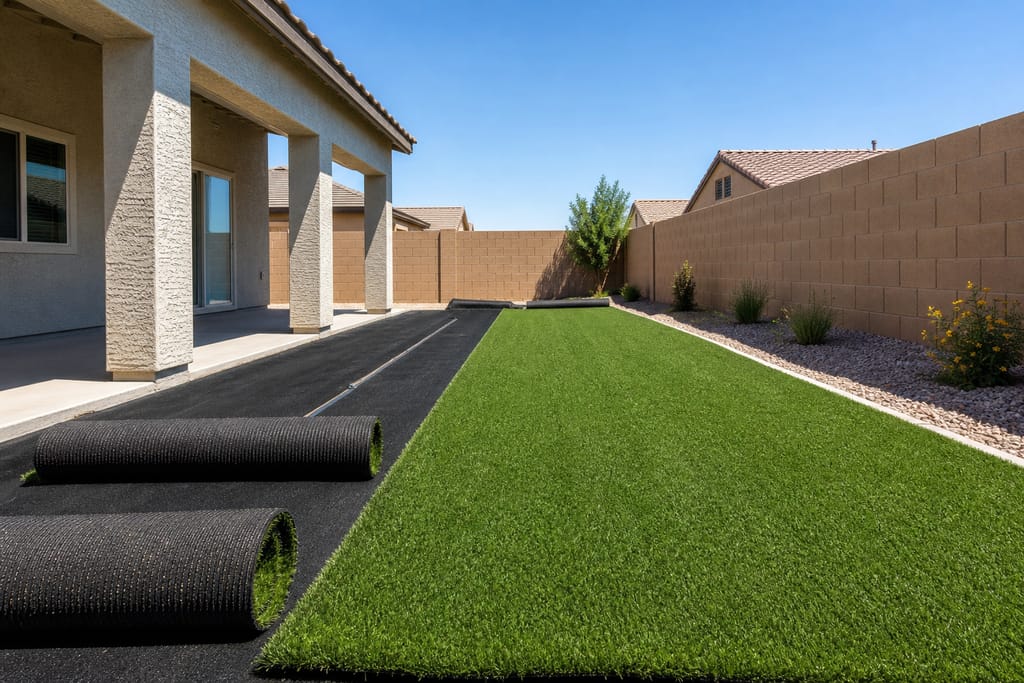 Step 4
Heat-resistant turf laying
Specialized desert turf fibers are installed to withstand extreme temperatures.
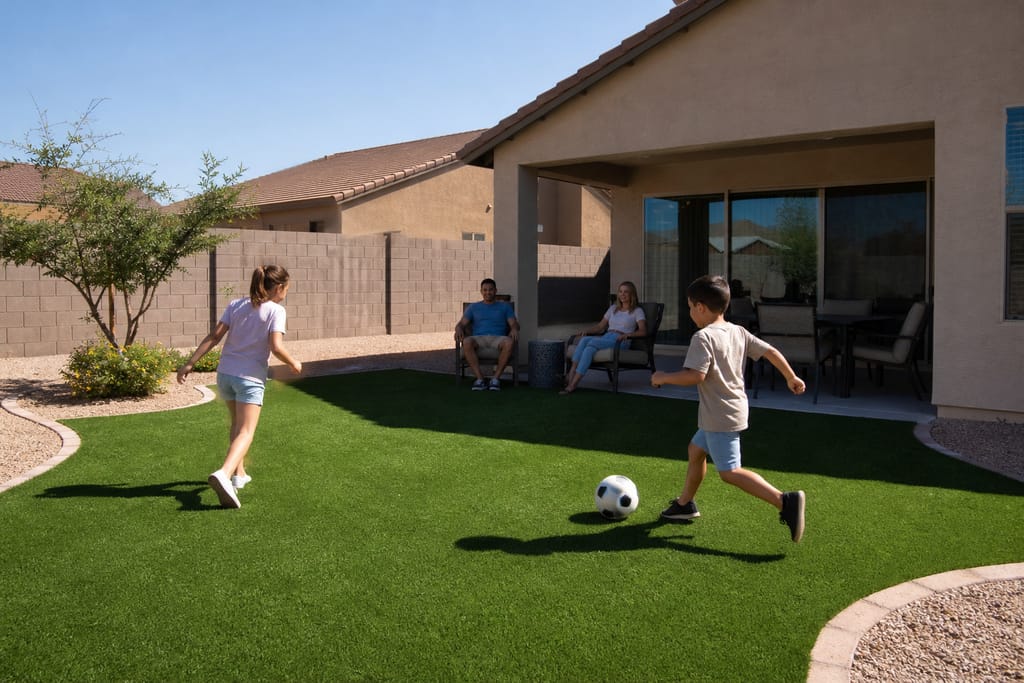 Step 5
Expansion gap allowance
Small gaps are built into seams to accommodate material expansion in heat.
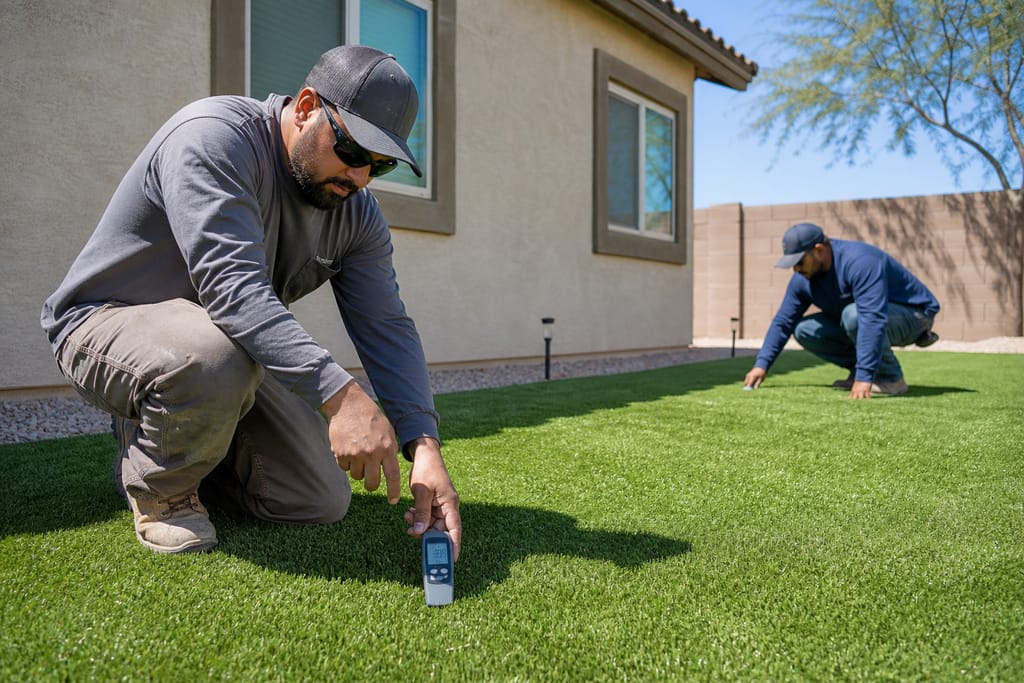 Step 6
Surface cooling check
The finished surface is tested for temperature performance under direct sun.
Materials
Materials and Methods for Desert-Adapted Turf Installs
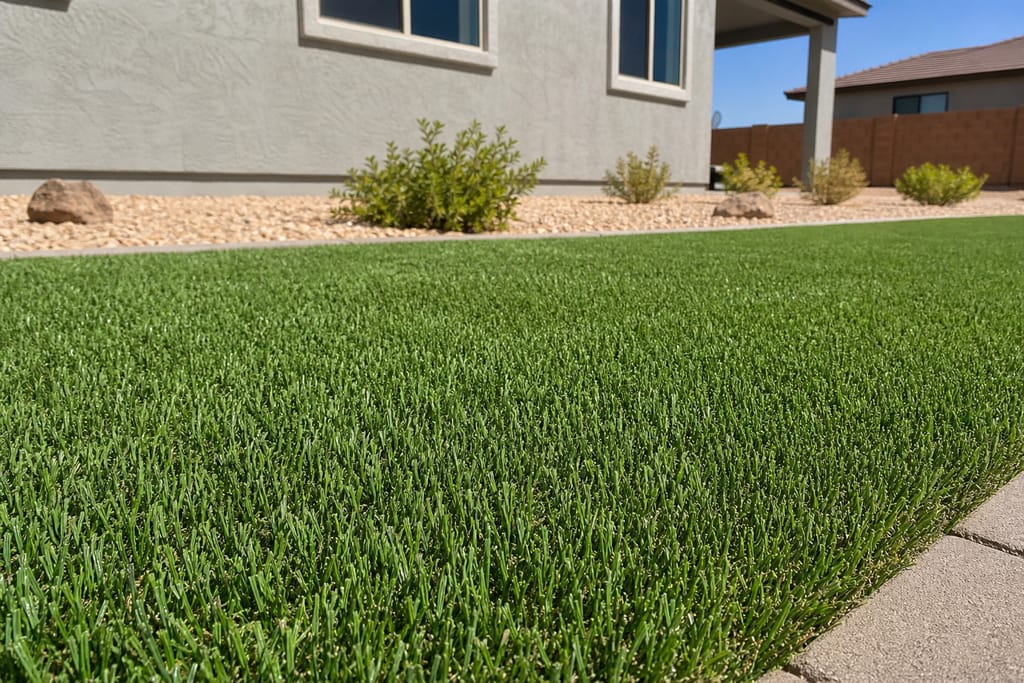
Heat-resistant turf fibers
Fibers engineered to resist melting and fading under intense desert sun.
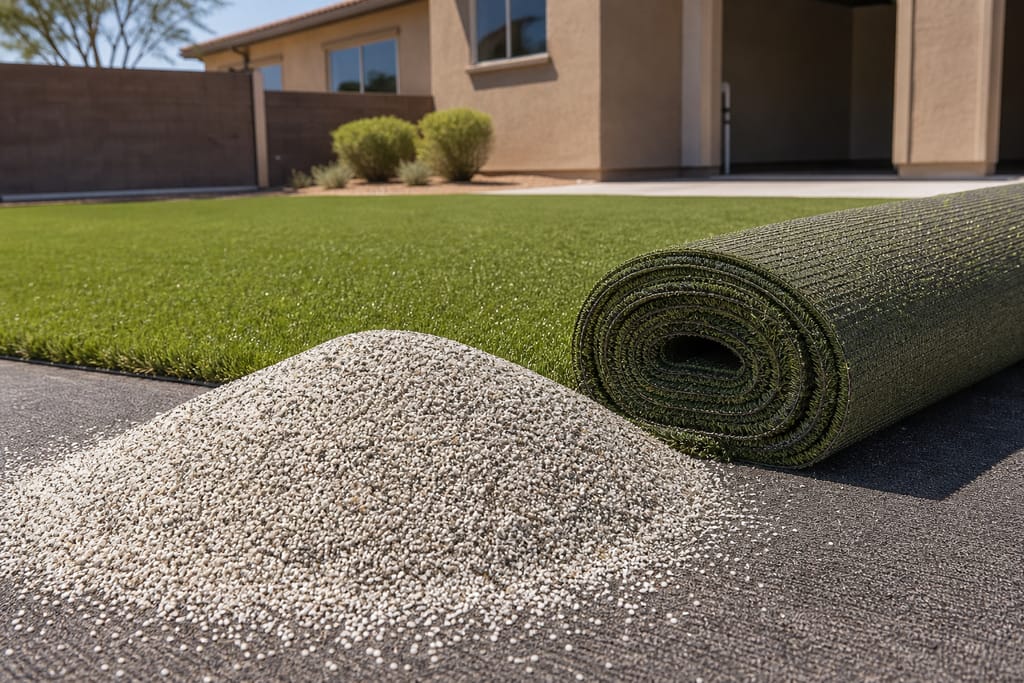
Reflective infill blend
Infill designed to reflect heat and reduce surface temperature buildup.
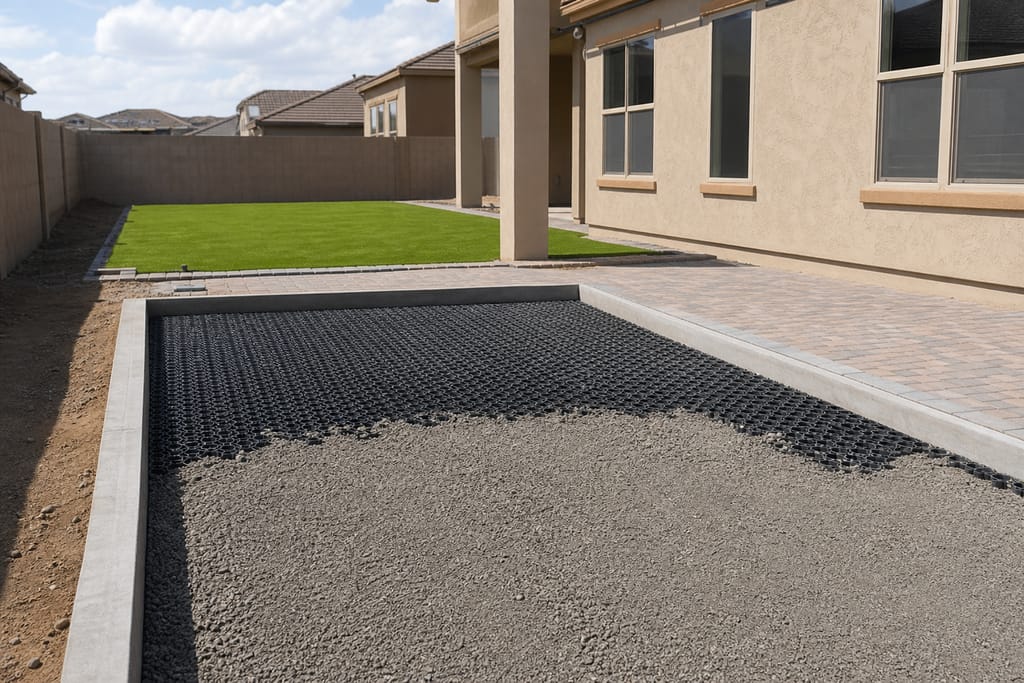
Drought-tolerant base layer
Base materials selected for stability in dry, low-moisture soil conditions.
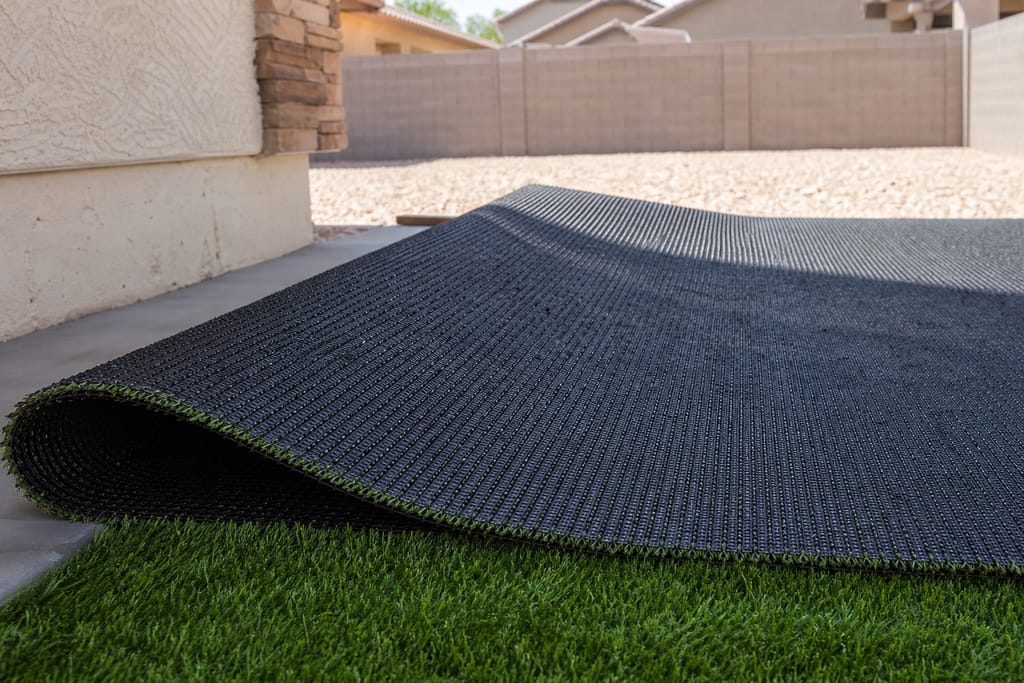
UV-protected backing
Backing treated with UV stabilizers to prevent cracking in high heat.
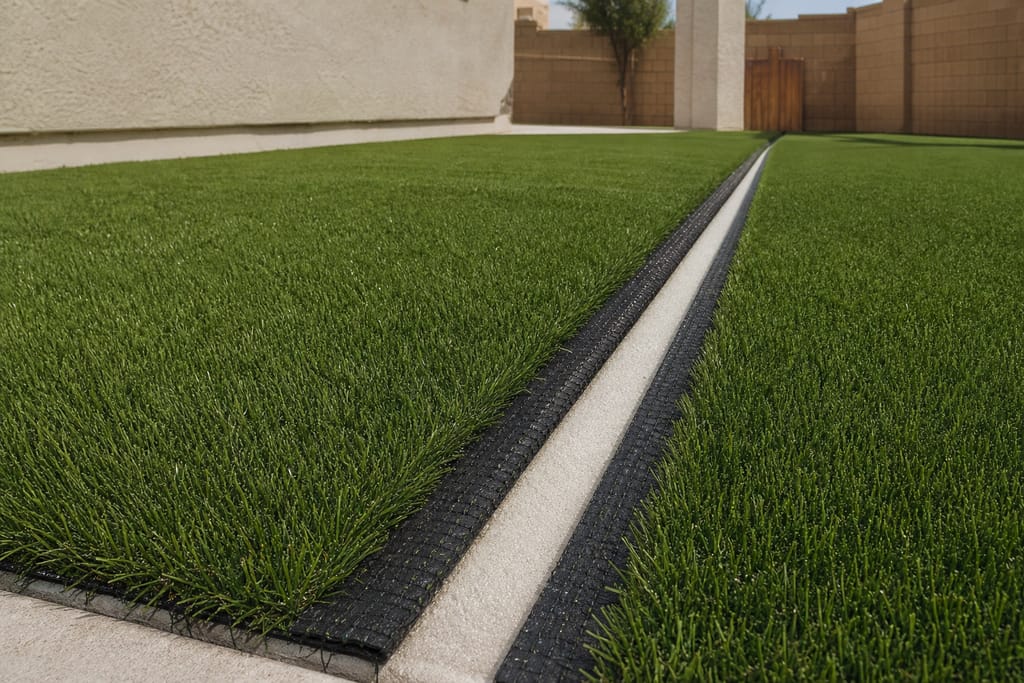
Thermal break seams
Seaming technique designed to handle material expansion from heat.
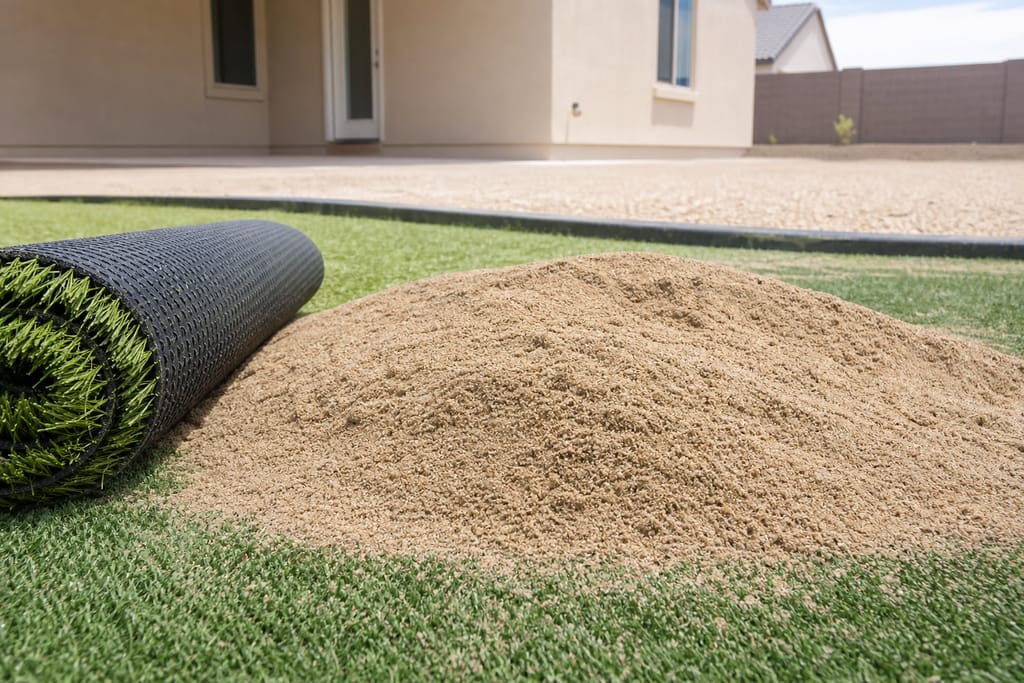
Sand-based filler
Sand filler provides stability while allowing heat dissipation.
Questions on materials?
Get a Free EstimateTimeline
How Long Does a Desert-Adapted Turf Install Take?
Material selection takes a bit longer up front, but install time is similar to a standard turf job.
- 01
Site visit and material selection
same day - 02
Base prep with expansion planning
1 day - 03
Turf lay and thermal-break seaming
1–2 days - 04
Surface temperature check
same day
Need a schedule that fits?
Get a Free EstimateBefore & after
Before and After Desert-Adapted Turf Installs
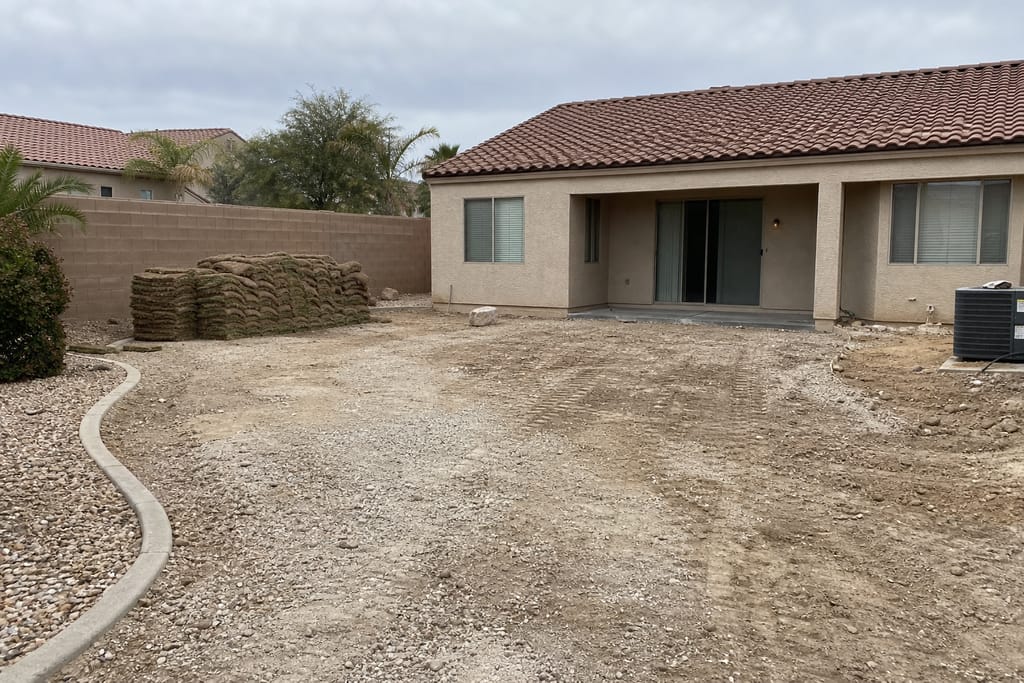
Before 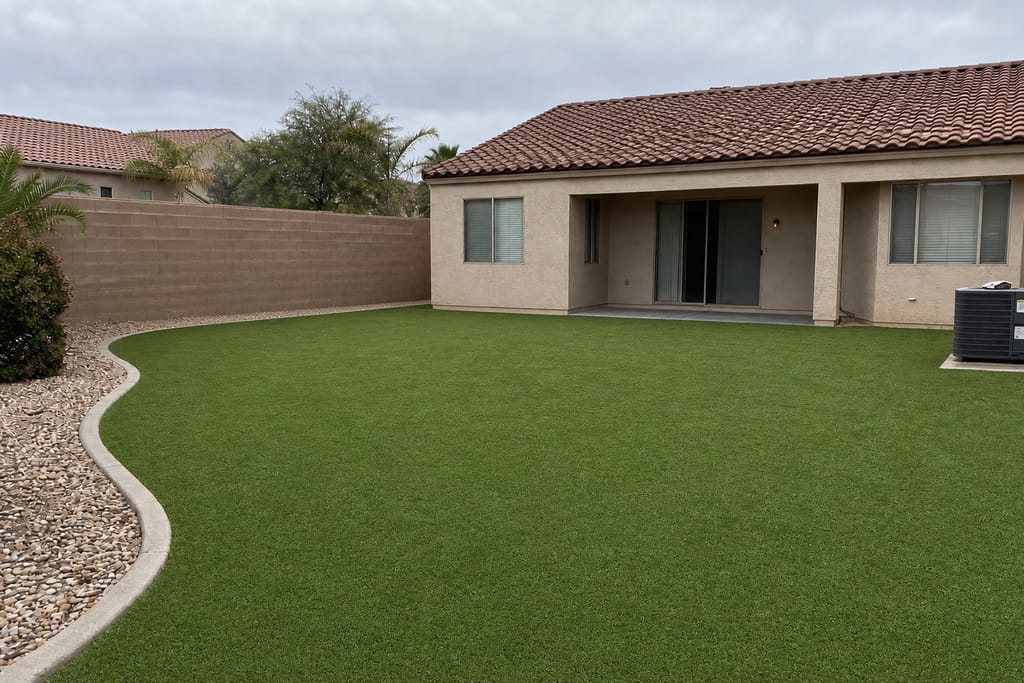
After
FAQs
Desert-Adapted Turf Installs FAQs
Can artificial turf really handle 115°F summers?
Standard turf can soften and get uncomfortably hot. Heat-reflective yarn and reflective infill cut down surface temperature noticeably compared to a basic product.
How much hotter is artificial turf than real grass?
Turf surface temperature typically runs higher than natural grass in direct sun, but heat-adapted materials and shaded placement narrow that gap considerably.
Does desert-adapted turf cost more than standard turf?
Modestly. The heat-reflective yarn and reflective infill carry a premium over base-level turf but usually pay off in comfort and longevity.
Why does turf buckle or ripple in Anthem's heat?
Without expansion gaps in the seams, repeated heat expansion and cooling contraction pushes turf out of alignment over time.
Is this a DIY-friendly upgrade to existing turf?
Not really. Thermal-break seam spacing requires calculating expansion ahead of time, which is easy to get wrong without experience.
What infill works best for heat reduction?
Reflective and zeolite-based infill blends perform better than standard silica sand for reducing surface heat buildup.
Next step
Get a Desert-Adapted Turf Install Estimate in Anthem
Call (928) 440-9737 or request a free estimate for turf that's actually built for Anthem summers, not just installed in one.
More services
Other Artificial Turf services
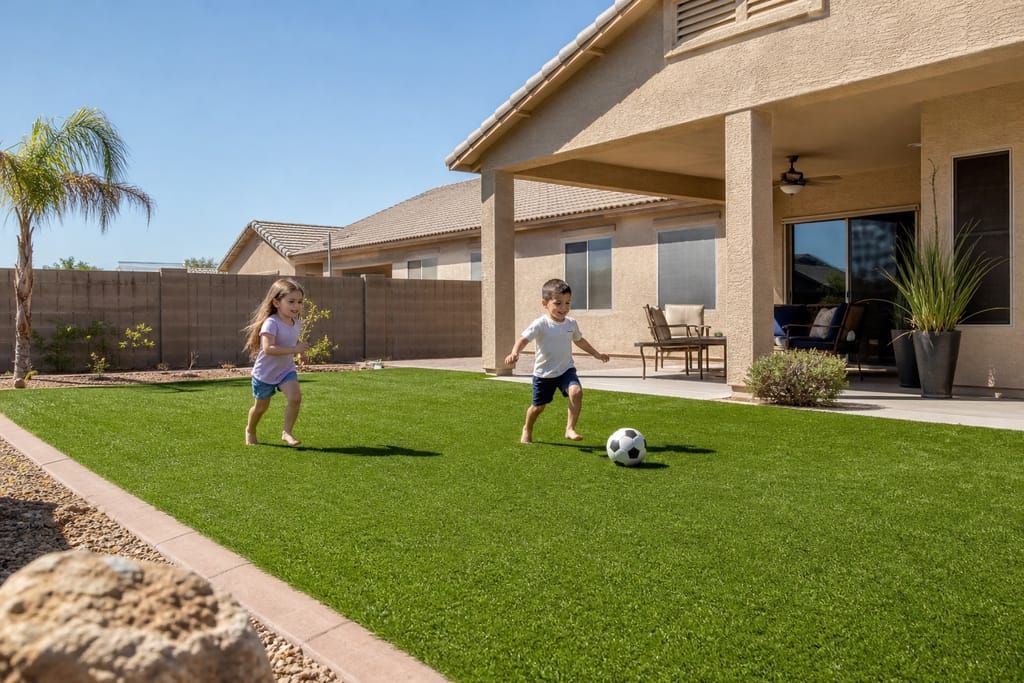
Artificial Turf Installation
Artificial turf installation in Anthem with HOA-compliant colors, heat-rated fiber, and a compacted granite base. Free estimates.
Putting Green Installation
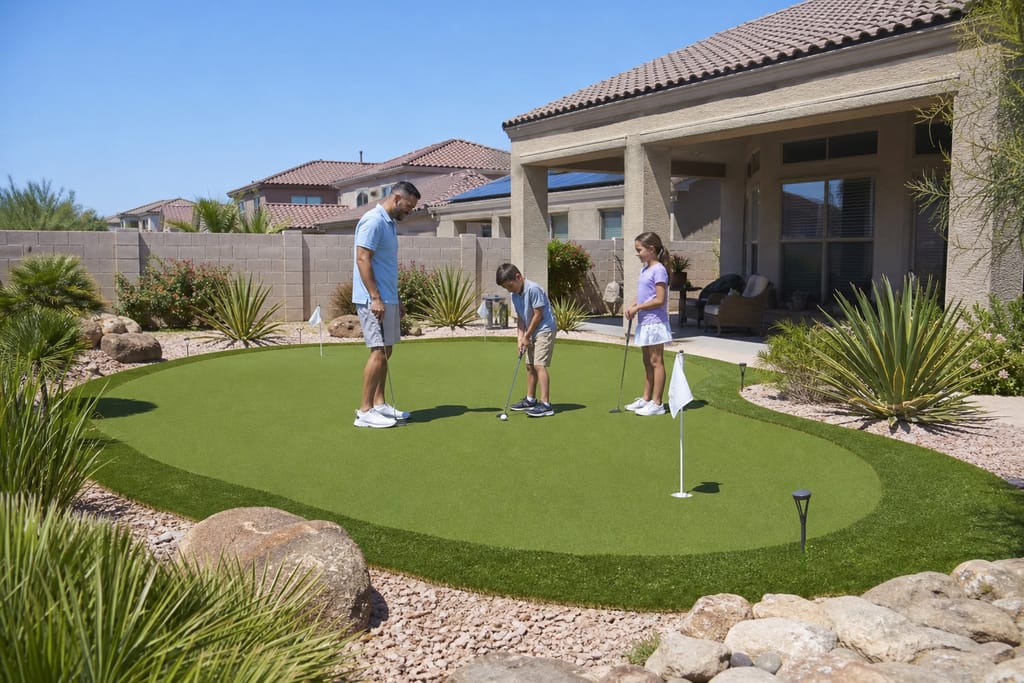
Putting green installation in Anthem, AZ with HOA-friendly turf, contoured breaks, and free estimates on backyard greens.
Pet Turf Installation
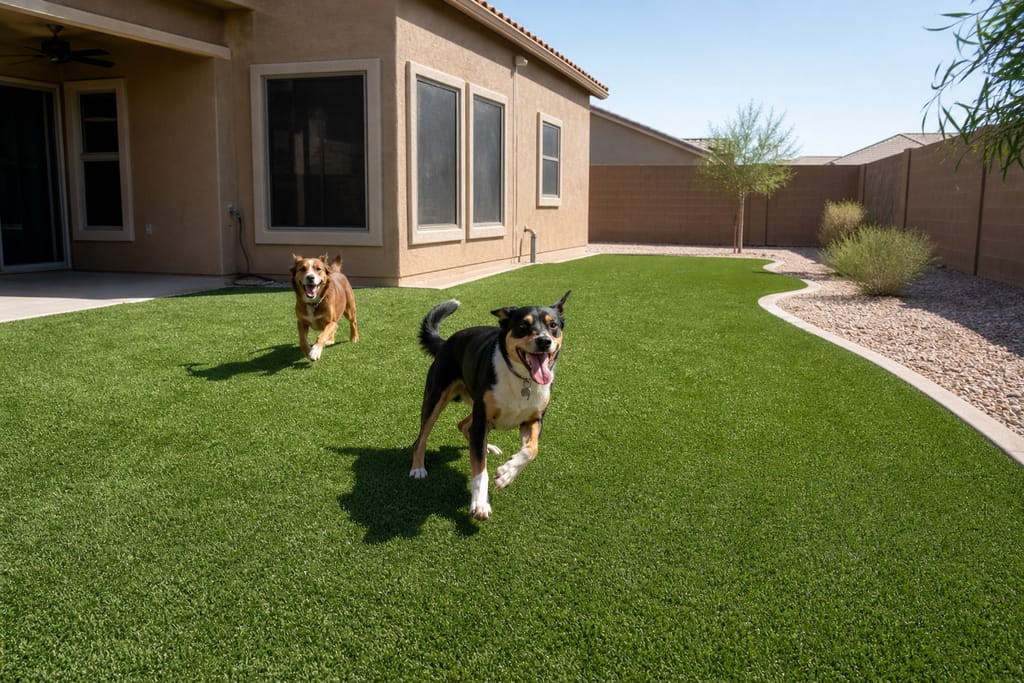
Pet turf installation in Anthem, AZ with odor-control infill, fast drainage, and free estimates for dog-friendly yards.
Ask about Desert-Adapted Turf Installs
Tell us about the project and how to reach you.